Monday, May 30, 2011

Sex-Selective Abortion on Rise

I recently came across an article in The Washington Post that talks about the rise in sex-selective abortions in India. I found this article especially interesting because of specific discussions we have had in class regarding the different roles men and women play in society depending on the culture they are raised in. Like many other cultures, India emphasizes the importance of a male’s role in their family and in society.

In 1996, India banned the use of medical technology to determine the sex of fetuses in order to selectively abort girls. Even though this procedure is illegal, findings from a recent study suggest that it is actually becoming more common and widespread than in the past. Sex-selective abortion is primarily intended to increase a couple’s chance of having at least on boy. The results of this study give a great depiction of the growth of this practice and provide a better understanding of gender roles in a predominately male dominated culture such as India. Although India’s desire to have at least one boy in the family does not seem to be as severe as certain cultures like China, there is still an evident preference for a male child. It would be interesting to take this study and research the findings further. Some questions I would like to look at specifically:

What are the underlying societal pressures to have a male child in India?

How do these statistics compare to other predominately male cultures?

Why is there such an increase in sex-selective abortions right now rather than in previous years?


Miss Representative

As a part of our final media project, Nikki and I showed a trailer for the documentary Miss Representative that was recently presented at the Sundance Film Festival. Although I have yet to see the entire documentary, I think the message of this documentary encompasses a lot of what we have talked about in class relating to women in the media. It not only focuses on the current image of woman in the media, but it also concentrates on the long-term effects this message sends to young people, especially young girls. The consequences are dire and are directly correlated to common psychological and physical problems of this generation of young individuals, which can range from poor self-esteem to more serious conditions such as bulimia and anorexia.

It is important for young women to see positive role models. By incorporating advice from powerful women we frequently see in the media in this documentary, it leaves the viewer with a sense of hope and gives young women a group of individuals to look up to. I think one of the most important parts of this documentary is that it not only brings to light a serious problem, but also concentrates on the steps needed for change to occur. This documentary is a step in the right direction. It presents a group of women that want to defy the media and the belief that, “You can’t be, what you can’t see.”

To see the full trailer and learn more about Miss Representation visit www.missrepresentation.org. This is also a great source to find the most up to date calendar of upcoming screenings and events. On a side note, following Miss Representative on any of their social media pages is a great source for current events relating women in the media.

Wednesday, May 25, 2011

Condoleezza Rice and Female Heads of State

http://www.youtube.com/watch?v=H19sMQgHE7Y&feature=related

While doing research for my final project, I stumbled across this video that depicts Condi Rice defending her beliefs of women in politics.  The interviewer is somewhat degrading towards her about the topic, categorizing her in one role or another.  Dr. Rice's belief is very geared toward individuality and uniqueness and so she did not take kindly to the containment of her achievements to simply being that of a woman or African American.

I find it very interesting that while she is discussing the topic of the empowerment of women, all her interviewer can do is capitalize the struggles she faced in a male-dominated environment (not to mention older and white).  He makes it sound as though she was outside of herself when serving in her position and that she didn't truly fit in where she was - she just persevered through the post.

The assumptions that were taken from other books and sources that Dr. Rice denied were also all examples that would have shown her as "weak" from a patriarchal perspective.  Rice immediately dismisses the "boxing" that the interviewer does with his questions and presents the subject from a more middle-of-the-road perspective.  She emphasizes the collaboration instead of giving the idea that the men did all of the work in government decisions (proportionally).

A Blueprint for Change

A couple of weeks ago I was riding back from the airport and found a piece of newspaper in the supershuttle I happened to be riding in.  I just saw "Women in the Economy" on the top of the page and picked it up, planning on reading it later.  Now having watched "Who's Counting?" this featured section seems more pertinent.

The Wall Street Journal has created a task force for to figure out what barriers are still in place for women to enter the workplace.  The piece of the section that I got my hands on had Gena Davis, actress, discussing the hours of television watched by children and the stereotypes and placements of male and female characters in shows.  She started with films such as "Thelma and Louise" and "A League of Their Own," and soon she had women coming up to her to tell their stories and how they related to these movies. 

After doing these films, she began to realize the disparity in gender roles in the mainstream media.  While watching TV with her daughter, she noticed the gender bias and gender gaps that media is presenting to children.  She began approaching producers and directors about it, who didn't even realize what they were doing.  She, along with others in Hollywood, ended up raising the money to do the largest research study on G-rated movies and television shows for kids 11 and younger.  They found that for every one female character, there are THREE male characters (in group scenes, it was five males to one female).

She has started a movement in Hollywood to change these perceptions and make changes in the gender roles in film.  They will be doing another study in 2015 to show the differences and changes in five years.

I found this article encouraging that people are stepping up and making the difference that it will take to truly turn a 180 on the perception of women, and therefore the success of women.  Below is a link to the article:

http://online.wsj.com/article/SB10001424052748704013604576247133240163732.html

Sunday, May 22, 2011

How would you feel if you weren’t allowed to drive a car?


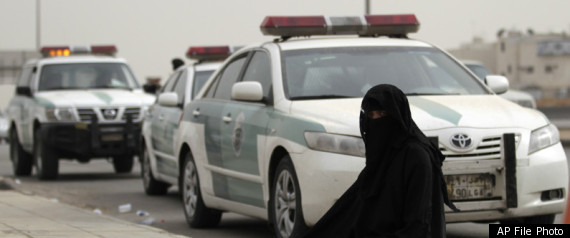
Manal al-Sherif, Saudi Woman, Detained For Defying Driving Ban

This article really stuck out in my mind because of how much I enjoy the freedom to jump in my car anytime I want and go for a ride. Ever since I was sixteen I have treasured the alone time I have in my car....it’s just me, the open road, and the music that puts me at ease. To not even have the option of doing so would be debilitating to me.

“Authorities detained a Saudi woman on Saturday after she launched a campaign against the driving ban for women in the ultraconservative kingdom and posted a video of herself behind the wheel on Facebook and YouTube to encourage others to copy her.”

Women must hire live in drivers that cost about $300-$400/month or rely on male family members to drive to work, school, grocery stores, doctor appointments, etc.

This relates to our class discussions because this article just like many of the accounts we’ve heard throughout this term shows us that every aspect of life has multiple lenses it can be viewed from. It is important to be aware of the alternate lenses so we don’t simply look at the people involved in unfamiliar situations as the “other”.

Friday, May 20, 2011

Women Making More Money

I found this article in the Washington Post about how women now are making more money than their male counterparts. It also furthers that idea by saying not just women, but married women are "bring home the big bucks" more than their husbands. Women are now about to make up a majority of the US workforce, are now graduating from college in higher numbers than men, and so now are becoming the better educated, higher-paid of the two.

Petula Dvorak, the author of this article, says that men now have it better off because they can just sit back and relax while women do all the work. Not only are more women now working, but they also have to keep up with the kids and housework. So we're basically doing both jobs. Really, what would they do without us? However, she goes on to say that because of this, more women today are depressed. They do not have the time to relax like their husbands because they are constantly working.

One of the last points that she makes is that our generation is now expected to be both the "house mom" as well as the "working mom." Whew. Seems like this will become a difficult thing for us to juggle.

I would hope that every woman feels that no matter which "job" they choose, that they do not feel belittled or feel as though they are too hardcore because since our generation now has both options, we should therefore be able to choose whichever one we want or both, and not be criticized for our choice.

Thursday, May 19, 2011

Bolsa Familia and Oportunidades - Paying poor mothers to care for their children

After class, I thought about the programs in Brazil (Bolsa Familia), Mexico (Oportunidades) and several other developing countries that pay poor women to keep their children in school and get medical care in terms of compensating them for their unpaid labor. These programs have shown success in educating and keeping healthy kids in impoverished families that might not otherwise be able to pay for education and healthcare costs for their kids. Also called "conditional payments," they in some ways monetize, and therefore give value to, the time and effort mothers must spend to support their kids in school and health.

Here's an article about such programs' effectiveness from the NY Times:

http://opinionator.blogs.nytimes.com/2011/01/03/to-beat-back-poverty-pay-the-poor/

Now back to the final project!

Wednesday, May 18, 2011

" I Choose My Choice! "

I read this article several weeks ago and knew I wanted to write about it, but didn't quite know when it would fit in. After today's class, I can include it because it raises some very interesting points about "women's work" and how they "count."

Essentially, the author of the article is laying out several different arguments and positions made by women from all types of perspectives. Alluding to the work of Betty Friedan, writer of the groundbreaking "Feminine Mystique," who illuminated the dissatisfaction that many "housewives" felt with their lives, not knowing particularly why-- the author of this article offers some theories from others on what this "housewife" mentality can mean.

One of the most interesting ones was made by Linda Hirshman who "considers all stay-at-home mothers fish in her barrel...[she] even tears mercilessly into the sleep-deprived new mothers who’ve made the unfortunate decision to share their rambling thoughts on something called Bloggingbaby.com... But in fact, Hirshman insists, the problem starts well before mother­hood. It begins when young women enter college and violate Hirshman’s No. 1 rule of female emancipation: “Don’t study art.”"

Hirshman gets particularly critical at mothers who have left their Harvard M.B.A degrees and high-powered jobs to"live in the perfect land of a Walgreens’ ad." She gripes at the fact that these women are choosing the "lesser" existence of child-rearing and taking care of the home instead of pursuing "more important" goals. ("Lawyer, along with doctor and judge, is the kind of high-degree, socially relevant job she approves of.")

In contrast, Neil Gilbert makes a very astute observation of Hirshman's argument by saying:

"Linda Hirshman claims that “the family—with its repetitious, socially invisible, physical tasks—is a necessary part of life, but allows fewer opportunities for full human flourishing than public spheres like the market or the government.” Many people would no doubt find unpaid household chores less interesting than Professor Hirshman’s job … But walking up and down the super­market aisle selecting food for a family dinner is a job that has more variety and autonomy than the paid work being done by the supermarket employees who stack the same shelves with the same food day after day, and those who stand in a narrow corner at the checkout counter all day tallying up the costs of purchases, and the workers next to them who pack the purchases into paper or plastic bags. That space in the market is a bit cramped for human flourishing."

I am a little more inclined to see it from Gilbert's point of view, simply because it is more all-encompassing of the various roles that many workers in many sectors must have-- because they have no choice.

The article continues on to describe the way in which women's "work"--whether at home or in the office has become criticized, analyzed and debated. Some point to the "women-at-home-is-oppressive" mentality, arguing that "women at work" is contributing more significantly to the economy, to society, and to the world (to be...general). However, are these situations really the "oppressive" scenarios that some feminists might describe? One paragraph in the article articulates that in reality, men probably don't have the time or energy to "continually oppress their wives."

Is the choice for a woman to "stay home" one that is backhanding all the important work of Betty Friedan and other feminists of her time? Is choosing this path setting women's movements back by not showing how "equal" women can be to men in the workplace?

What about the simple fact that it is a very PARTICULAR type of woman who actually HAS the choice to make? This type of critique cannot even be applied to well, a majority of women in the world who are forced to work in order to survive. "Staying at home" is not an option for them, so how can they be included in this type of analysis of "achieving the feminist dream"?

The article moves between many points, and the author herself indicates that she has the luxury of staying at home as a writer at times, spending time with her children, etc. How might her particular perspective influence her writer and the people she chooses to portray?

From a "big picture" standpoint, who really has the appropriate "position" from which to judge any of these women and the types of women that are not portrayed? Do we really know what goes on FULLY in a "mom's world"? Perhaps it is those women who have more time to participate meaningfully in the community and be activists for social change.... are the "working moms" doing this kind of work? It's hard to know. Regardless, this article shows many sides of the discussion...and even if it is a long read, it's definitely worth it.

Facebook COO Addresses The Domination Of Men In The Business World


Facebook COO: Men run the world
Sheryl Sandberg, Facebook COO, gave the commencement speech at Barnard College, an all female university, this past weekend. In her speech she focused on the importance of women in our generation overcoming patriarchal tendencies that have saturated and continue to saturate the business world today. She goes on to discuss the gender gap that societies are experiencing in the workforce and our need to do something to bridge this gap. Emphasis is placed on the notion that women are capable to make an impact in our world just as long as they have the drive to do so. She believes this is the main factor in the gender gap. The most powerful quote from Sandberg in my opinion was "Men are more ambitious. We will never close the achievement gap if we don't close the ambition gap," she went on to say "Women underestimate their performance." Sandberg is a trailblazer in the movement for women to attain positions of power. She has secured top positions in two of the most influential companies we've ever seen, Google and Facebook. She is also an activist for women in the workforce. If interested, you can check out her TED talk entitled "Why We Have Too Few Women Leaders." AMAZING TED talk!

Wednesday, May 11, 2011

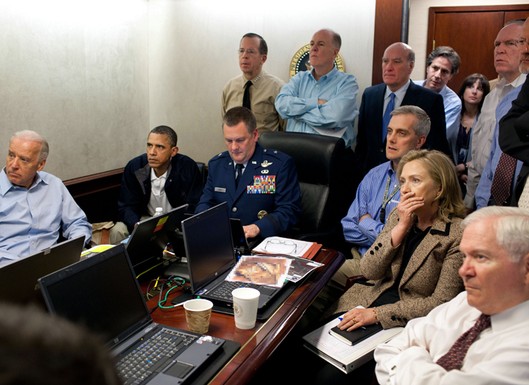
HIllary edited out of historic photo


This is too good/bad not to share - timely, too. A Hasidic paper based in Brooklyn edited Sec. of State Clinton out a photo where she was sitting in the situation room with Pres. Obama and others, watching the live feed of the mission to kill bin Laden; the only other female in that picture, a counterterrorism analyst, Audrey Thomason, was similarly removed by the magic of Photoshop.

Read the full story here:

http://news.yahoo.com/s/yblog_thecutline/20110509/ts_yblog_thecutline/wheres-hillary-hasidic-paper-breaks-the-rules-by-editing-her-out-of-white-house-photo

Monday, May 9, 2011

Islamophobia continued

While we covered Islamophobia several weeks ago, this story from the past weekend is a fitting reminder that Osama bin Laden's recent killing may engender more such discrimination. The oh-so-ironic story is below and here is a summary: Two imams bound for a conference on Islamophobia in Charlotte, NC, were kicked off their flight from Memphis to Charlotte by the pilot, after having passed through extensive airport security. They were able to take a later flight, but their lawyer is investigating the pilot's motives and vows to sue if it seems to have been racially motivated.

One of the imams, Masudur Rahman, made an interesting comparison to Rosa Parks:
"If the reason was security, the security was done, the security people were satisfied with us," Rahman said. "It reminded me when the black lady was kicked from the bus because of racism. That history I found today in that plane."


Read the full story, with an accompanying video, here. There are some interesting comments as well and I admit to being impressed by the reasonable and non-discriminatory tenor of *some* of them.

Sunday, May 8, 2011

"there's a spark in you"

Just wanted to throw something positive and fun up on the blog on this Sunday night. While it may sound silly, we talk about empowerment, and while I was listening to a different song on YouTube, the Katy Perry song, Firework, showed up as a recommended song. If you watch the video, and listen to the lyrics, it's not just a poppy, catchy song, it has real meaning behind it. Watching it was watching media that spoke to males and females, and told them it's Ok to be you, because you, no matter who you are, you have a spark in you. One of the characters in the video was male, at a party, and seemed alone, but got up, and found his spark, and felt comfortable to go kiss another male. Another character, a female, was at a pool party (which I can say as a female was/is always a stress filled thing, even though it's supposed to be fun) and while her friend was calling her to come in the pool, she shook her head - then, she stripped to her underwear, jumped in the pool and fireworks burst out of her chest when she came up for air. I know this is so much different than what we typically talk about and discuss in class, but one of my other professors at Korbel always says that while our studies focus on the serious things, the difficult and hard things to learn about, we have to continue to laugh, find humor and keep smiling. So - check the video out, and hope it makes you smile, and maybe even dance a little :)

http://www.youtube.com/watch?v=QGJuMBdaqIw

Globalization: True or False?

The case against globaloney

This article from The Economist reviews the book "World 3.0" by author Pankaj Ghemawat. In in, Ghemawat argues that the world is a lot less globalized than most people believe or want to believe. He uses a number of statistics, most of them from the economic sphere, to demonstrate that "global integration is surprisingly low." Immigration trends and the affects of the September 11th are also used to illustrate the idea that "globalisation [sic] is reversible." Having not read the book, it is difficult to assess Ghemawat's position; however, I think that it is a position worth considering. Would "reversing globalization" be a good thing? In class, we mostly focused on the negative effects of globalization; yet, I don't think that being "de-globalized" is possible, especially in terms of foreign policy and communication. I did find Ghemawat's argument that, by adapting to local cultures, McDonald's and MTV also prove that the world is less globalized to be a little shaky. In my opinion, accommodating local consumers is an adept marketing move and actually proves that these companies have taken the time to understand how people in other countries will spend their money. The fact that McDonald's and MTV can exist in cultures whose values seem directly opposed to what these companies offer seems to be an argument for globalization, not against. What do you think of Ghemawat's argument? Is the world less globalized than we think? Is this a good thing or a bad thing?

Saturday, May 7, 2011

Discrepancies of Women in the Workplace

As a senior entering my last two weeks of college, the real world and jobs has been at the forefront of my mind. The combination of applying to jobs and taking this class, which has opened my eyes to the many inequalities women face in day –to – day life, has got me thinking about the discrepancies between women and men in the workplace.

Why is it that workplace earnings still gap between women and men today? According to the General Accountability Office, “the weekly earnings of full – time working women were about three fourths of men’s weekly earnings” (About.com). Women earn 80 cents for every dollar earned by their male counterparts (About.com). Reasons for this gap in earnings between women and men suggest that it is a result of women balancing work and family life. Women often work less full –time jobs than men to care for their children. On the other hand, men with children tend to receive a boost in their earnings… why is this?

Clearly, sexism is still very prevalent in the workplace. There are not enough reasons or evidence to suggest why men still typically get paid more than women. This needs to change and perhaps change can occur through activism and electing political candidates who stress women’s rights.

http://usgovinfo.about.com/cs/censusstatistic/a/womenspay.htm

Sunday, May 1, 2011

Gender Identity Anti-Discrimination Act and Chrissy Lee Polis

Gender Identity Anti-Discrimination Act and Chrissy Lee Polis

We spoke about Chrissy Lee Polis and her violent beating in a Maryland McDonald’s in class on Wednesday. Chrissy is a transgender woman and when she used the women’s restroom at a McDonald’s restaurant other restaurant patrons brutally attacked her while employees stood by to video tape and mock the situation. Advocacy groups and Chrissy are using this horrifying attack as a call to action to advance legislation surrounding these types of incidences. Merely weeks before Chrissy’s beating the Maryland legislation found the Gender Identity Ant-Discrimination Act to be not worthy of pursuing. “The bill as written would have banned discrimination on the basis of gender identity in employment, housing and credit. A provision to ban discrimination in public accommodations (which would cover restaurants) was removed by the bill’s sponsor, Del. Joseline Pena-Melnyk, who cited difficulty in passing the inclusive legislation because of legislators’ fear of addressing the issue of bathrooms at public accommodations.” The Anti-Transgender organizations continue to use restroom usage as the foundation for their anti-transgender arguments.

This article recognizes the silver lining of the beating as the, “outpouring of support and solidarity from people across the country with the individual who was targeted simply because of her identity, and because of her bravery to live her life authentically.” This support has refocused some attention on the Anti-Discrimination Act and people are now demanding this bill is passed. Do you think a law such as the Gender Identity Anti-Discrimination Act will be successful in making our society more safe and welcoming for all? Do you know of any other states with similar legislation and has it been successful?


http://www.standingonthesideoflove.org/blog/a-call-to-action-alleged-hate-crime-against-maryland-trans-woman-garners-national-attention/